When news pumps meet geopolitical tensions: Why FOMO becomes dangerous
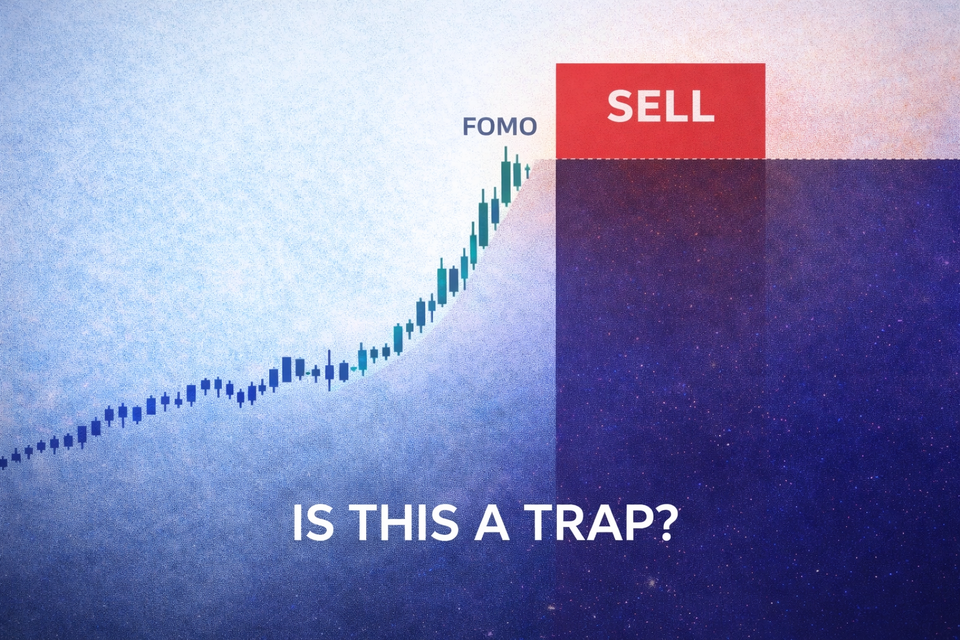
The crypto market saw a strong upward move two days ago after a wave of positive news triggered a broad rally across several major assets. Bitcoin and many altcoins pushed aggressively into higher price levels within a relatively short period of time, filling multiple fair value gaps along the way and creating what at first glance looks like renewed bullish momentum across the market.
However, when markets move this quickly, it becomes important to step back and look at the underlying structure rather than focusing only on the immediate price action.
From a technical perspective, a large part of the market is now trading in clearly overbought territory across multiple timeframes. On many assets the RSI on the 4-hour chart is already sitting between 70 and 80, with several major coins approaching similar levels even on the daily timeframe. These readings alone do not automatically signal an immediate reversal, but they do indicate that price has moved far away from its short-term equilibrium.
At the same time, several assets are now pushing outside the upper Bollinger Bands on both the 4-hour and daily charts. Historically, when price extends this far beyond the upper band, the market tends to become structurally unstable in the short term. These types of extensions often occur during momentum-driven moves, but they rarely sustain themselves without some form of consolidation or retracement. From a technical standpoint this kind of expansion is usually unfavorable for new long positions while it begins to create more attractive conditions for potential short setups.
Another important aspect of today’s move is the role of fair value gaps within the market structure. When price moves very quickly through a range, it often leaves behind areas where little to no trading activity occurred. These inefficiencies are known as fair value gaps and they represent zones where the market may later return in order to rebalance liquidity. During strong news-driven impulses price frequently moves through these gaps rapidly, filling them as momentum accelerates. Once a large portion of those inefficiencies have been rebalanced, however, the immediate upside momentum can begin to slow as the market starts searching for new liquidity.
Right now we are seeing exactly this type of dynamic play out. Several positive fair value gaps have already been filled during the move, while price is simultaneously approaching major liquidity clusters and visible sell walls that previously acted as resistance areas. When markets reach this stage after an aggressive expansion, volatility often increases as buyers and sellers begin competing for control.
Beyond the technical structure, it is also important to consider the broader macro environment in which this move is happening. News-driven rallies can create powerful short-term momentum, but historically some of the most unstable market phases occur when strong price expansions appear while geopolitical tensions remain elevated. Periods where global conflicts, macro uncertainty and rapid speculative inflows collide tend to produce unpredictable market behaviour.
A Pattern We Have Seen Before
We have seen a comparable dynamic before. During the flash crash in October last year, several indicators had already been signalling an overheated market environment days before the event itself occurred. Momentum oscillators were stretched, price had extended far beyond its statistical averages and structural imbalances were clearly visible across multiple technical indicators. From a purely technical perspective, the warning signals appeared well in advance. Investors had multiple opportunities to reduce exposure or close positions before the actual crash unfolded.
Yet many market participants remained heavily exposed because sentiment was still dominated by momentum and the fear of missing further upside.
This is why phases like the current one often become less about predicting the next price move and more about managing positioning responsibly. Markets that accelerate quickly can continue moving higher for a period of time, but the combination of overbought conditions, stretched Bollinger Band expansions and already filled fair value gaps significantly increases the probability of volatility or temporary corrections.
For this reason our current approach remains cautious. Long exposure is largely hedged while attention is gradually shifting toward potential short opportunities as price approaches increasingly overheated levels.
In fast-moving markets the greatest risk is rarely the lack of opportunity. More often it is the temptation to chase momentum at exactly the moment when the market has already pushed far beyond its structural balance.