Why leverage and active spot trading should work together and not against each other
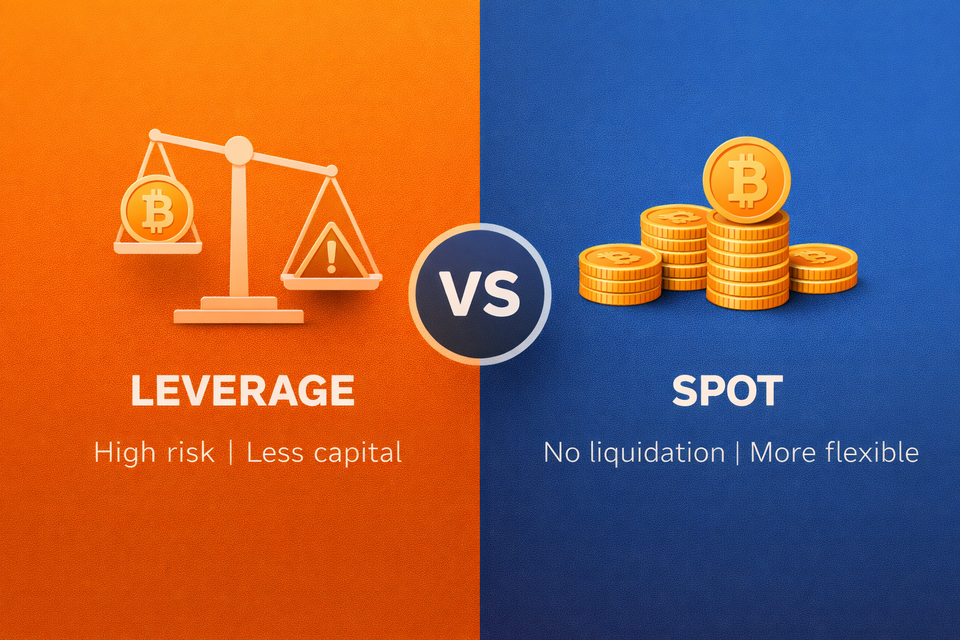
One of the biggest misconceptions in crypto trading is the idea that traders have to choose between leverage trading and spot investing. In reality, both approaches serve completely different purposes, and when used correctly they can complement each other extremely well.
At Blocksignal we look at the market through multiple layers of exposure. Leverage is a powerful tool when the market offers clear directional setups and well-defined invalidation levels. In those moments it allows traders to express conviction with capital efficiency and react quickly to market structure.
But leverage should never be the only tool in the toolbox.
The past 30 days are a good example of why. During the recent geopolitical tensions and the broader uncertainty across global markets, crypto repeatedly produced sharp moves in both directions. In this kind of environment leverage can work very well for short-term opportunities, especially when price moves into clearly defined resistance areas where risk can be tightly controlled.
Over the last month we were able to capture several strong short setups as price moved into key zones. Once those target areas were reached, however, the market environment changed. Direction became less clear, volatility remained elevated, and opening aggressive long positions with leverage would have significantly increased liquidation risk.
This is exactly where active spot trading becomes valuable.
Instead of forcing leveraged trades in an uncertain environment, we started accumulating positions through active spot entries. Without leverage the liquidation risk disappears, and position sizing can be managed much more flexibly. In the worst case you simply need patience and a bit of seat-time in the position, but you are not exposed to forced liquidation events caused by short-term volatility spikes.
Another advantage is capital deployment. With spot positions traders can often allocate larger volume compared to leveraged trades because the downside risk is structurally different. When managed actively — scaling into positions, managing exposure and reacting to market structure — spot trading can still generate meaningful returns even without leverage.
Over the past month this combination of leveraged setups during clear directional phases and active spot management during uncertain periods allowed us to generate more than 40% in total performance across both approaches. Not because leverage was used everywhere, but because it was used selectively and in the right context.
The key takeaway is simple. Leverage tends to work best in moments of clarity, while spot trading often becomes more valuable during phases of uncertainty. Understanding when to shift between both approaches is often what separates reactive trading from structured market participation.
If you're interested in learning more about how we approach market structure, risk management and different layers of market exposure, you can find more insights at
www.blocksignal.org