

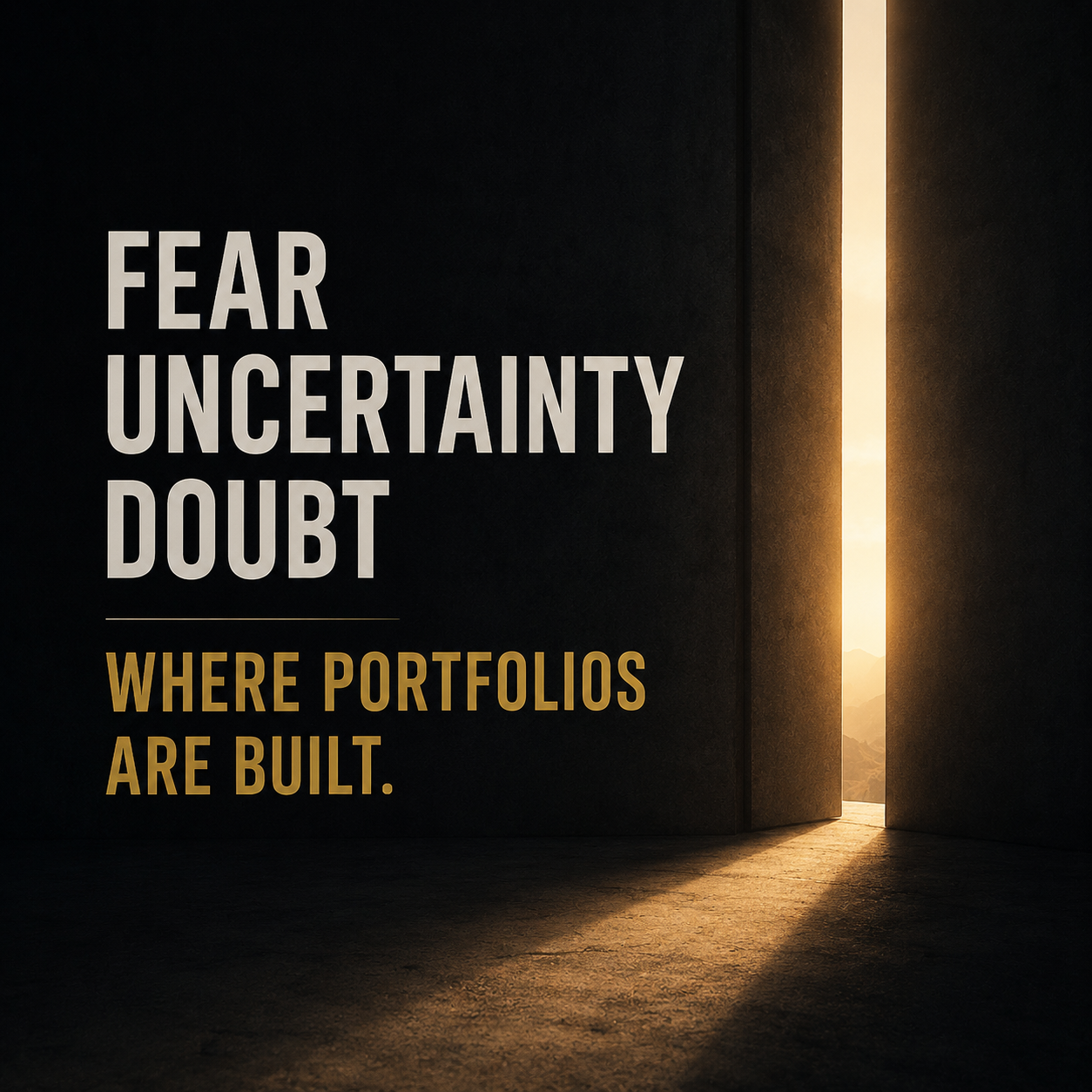
Most investors love green candles. They love breakouts, new highs and charts moving straight up. Yet if you look back at almost every successful portfolio, the biggest opportunities rarely appeared when everything felt comfortable. They usually emerged during periods of uncertainty, when sentiment was weak, conviction was low and most market participants were busy focusing on what could go wrong rather than what might come next.
The recent correction is a good example. Just a few weeks ago, many assets were trading in heavily stretched conditions. Momentum indicators were elevated, leverage had built up across large parts of the market and bullish positioning had become increasingly crowded. In that environment, a correction wasn't necessarily a sign of weakness. In many ways, it was a healthy reset. Markets don't move in straight lines forever. Sometimes they need to cool down, remove excess leverage and force participants to reassess risk before the next move can develop.
What makes these periods so interesting is that they often feel the worst while they are happening. Prices fall, timelines turn bearish and uncertainty suddenly dominates the conversation. Yet historically, these are often the phases where portfolios are quietly built. Not because every dip automatically becomes a buying opportunity, but because volatility creates pricing opportunities that simply don't exist once markets have already recovered and confidence has returned.
That's also one of the reasons why risk management matters so much. Holding profitable positions indefinitely without a plan can leave investors exposed when conditions change. Securing gains, reducing risk and maintaining flexibility creates room to reposition when opportunities appear. Whether it's a local correction or a larger event like last year's flash crash, having capital available during periods of weakness is often more valuable than squeezing out the last few percent of an already extended move.
For investors, corrections can provide opportunities to scale into positions gradually through entry splits and cost-averaging strategies. For leveraged traders, patience is usually the more valuable asset. Waiting for confirmation and allowing the market to reveal its direction often produces better outcomes than chasing the first bounce in an environment that remains uncertain.
The biggest mistake many participants make is treating corrections as something that should be avoided at all costs. In reality, corrections are a natural part of every market cycle. They remove excess optimism, reset expectations and create the conditions for future opportunities. Rallies attract attention because they are exciting. Corrections rarely receive the same enthusiasm, but they are often where long-term portfolios are actually built.
If you want to seize current market momentum, start by joining our free discord community: